It has been argued that India should have held back on disengagement from the Kailash Range, using that as a trump card to force Chinese concessions in areas such as Depsang, where they hold the advantage.
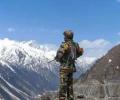
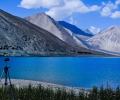
India and China have already disengaged from the banks of Pangong lake after extensive talks and the Gogra Heights and Hot Springs areas are left to be resolved as these friction points were created post-Chinese aggression last year.
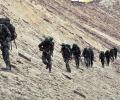
China and India have made 'positive progress' to resolve the border standoff, with both sides maintaining close communication through diplomatic and military channels, a senior foreign ministry official said in Beijing on Friday.
China said that "sound and stable ties" serve the common interests of China and India.
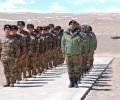
The two countries have been engaged in a military standoff for almost a year but disengaged from the most contentious Pangong lake area last month after extensive talks at both military and political levels.
The sources said the focus of the talks was to take forward the disengagement process in friction points like Hot Springs, Gogra and Depsang in eastern Ladakh.
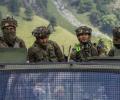
India and China on Saturday held another round of military talks with a focus on taking forward the disengagement process in Hot Springs, Gogra and Depsang in eastern Ladakh and bring down the tensions in the region, official sources said.

India recently outflanked China by taking control of strategic height near Pangong lake's southern bank.

Sources indicated that during Saturday's talks, India will insist on a faster disengagement process in remaining areas to bring down tension in the region, which has witnessed a tense standoff between the two militaries for over nine months.

Indian Army officers are convinced China is maintaining the pretence of dialogue and negotiations in order to create the opportunity to occupy more Indian territory. Senior Indian planners apprehend this might be a Chinese ploy to divert attention from Depsang, in Northern Ladakh, which might be China's actual target.

The Chinese have only created limited defences for protection of their posts which are located well in depth and much away from the Line of Actual Control, notes Colonel S Dinny (retd).
'The use of military power to settle disputes is not always preferred and is the last preferred option, but it certainly remains an option.'
'The Indian government wakes up after the fact when it can do nothing, or rather lacks the will to prosecute military actions to reverse these adverse PLA-driven developments.'

He said there were no signs of an "overt collusion" between China and Pakistan during the Ladakh standoff but India also caters to a long term strategy for not a two, but a two-and-half front war. With the half front, he was referring to the internal security.
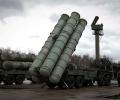
RInstead of disengagement, the Indian and Chinese armies have deployed an estimated 35,000 to 40,000 soldiers each along the LAC. The PLA has deployed S-400 air defence missiles to neutralise the IAF's advantage in air power

'We must acknowledge China will use Pakistan against India.' 'We all need to know that these two countries are ready to destabilise India at all times.'
'This reluctance to respond forcefully to Chinese PLA provocations and outright aggression has as much to do with Prime Minister Modi personally, as with the institutional mindset of the MEA or even the Indian Army.' 'They are scarred by the 1962 War and are still cowed by China.'

'The military advantage the Indian Army had gained by the Special Frontier Force occupying the heights of the Rezang La-Rechin La ridge on the Kailash Range is lost without the PLA withdrawing to east of the Khurnak Fort line.'
'We must be careful because China has not given its design in Eastern Ladakh.'

'India's behaviour violated agreements...It's a serious military provocation'
'India cannot allow Beijing's policy of stabilising and destabilising the border at will to perpetuate its own ends.' A riveting excerpt from Manish Tiwari's 10 Flashpoints; 20 Years National Security Situations That Impacted India.

India's water future remains very bleak. The monsoon season, which once extended to 4 months, is now down to less than 30 days of heavy rain.
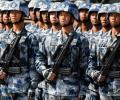
With the Indian Army having blocked the PLA several kilometres inside India, hundreds of soldiers from both sides remain in a tense face-off.

'The last ten months show that India is not going to trust China.' 'Our military commanders are not going to believe that all is well till it actually is.'
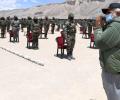
'By not even acknowledging China's occupation of Indian territory Modi signalled to Beijing that he was not prepared to used forceful means to vacate the Chinese occupation, and that his government was reconciled to this loss of territory and accepted the fait accompli engineered by the PLA.'

Like millions of people across the world, the year 2020 had dealt me irreplaceable losses and the lowest of blows. Like I have always done at such junctures, I had sought the refuge of the mountains. I wanted to end the year on a high, to show the finger to life, says Sumit Bhattacharya after a memorable journey to North Sikkim.

'If you behave like a nail, the adversary will behave like a hammer.'

National GeographicNational GeographicNational Geographic
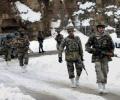
'The Indian Army's surveillance had noticed the Chinese movements.' 'There was no intelligence failure.'
'China has forcibly occupied territory it had never occupied before, blocked Indian patrols' access to areas they had patrolled for decades and, most provocatively, killed 20 Indian soldiers.' 'Most countries would regard these as acts of war.' 'New Delhi has apparently taken off the table the option of evicting the PLA with force,' observes Ajai Shukla.
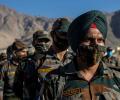
Did Xi deliver a message to Modi at Mamallapuram, which though couched in a velvet glove was time-bound? What was that message? It is clear Indian/Israeli/US spy satellites would not have missed detecting Chinese troop movements towards the Ladakh-Tibet frontier. Then why did some important functionaries in the Government of India choose to only ask the Russians about this in April 2020? Was Russian reassurance of Chinese troop movements being part of a routine exercise the reason that the Leh-based XIV Corps did not mobilise itself for its annual summer exercises near the LAC? A fascinating excerpt from Iqbal Chand Malhotra's new book Red Fear: The China Threat.
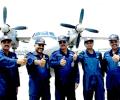
The sortie had to be executed in good weather and in sub-zero temperatures, which meant it was to be accomplished by mid or third week in May before the earth heated up and the monsoon clouds made things difficult.
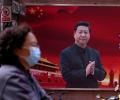
China has not limited the 'battle' to the diplomatic field alone; the People's Liberation Army has become aggressive on the ground too. The recent 'fights' in Northern Sikkim and Ladakh are part of the pattern, asserts Claude Arpi.

The overall winners will be announced on October 15 at an awards ceremony in the Natural History Museum's iconic Hintze Hall.


What does one do when one day, out of the blue, one is told to go on a road trip to the Everest Base Camp?

The Underwater Photographer of the Year competition has announced the winners of this year's contest, with France's Gabriel Barathieu being named Underwater Photographer of the Year for an image of a hunting octopus. UPY was kind enough to share some of this year's honorees with us below.

'In 2015 I watched films in so many places. I attended several film festivals around the world -- Berlin, Tribeca (New York), Telluride, Toronto, Zurich, Mumbai, Dharamsala and Goa,' says Aseem Chhabra, author of a forthcoming book on Shashi Kapoor.
